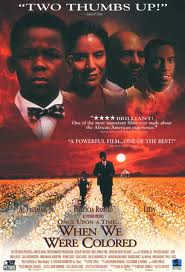
I had the pleasure of watching this a few weeks ago with a short but informative Q&A with the director Tim Reid. Tim Reid may not be a household name especially in the UK but he is an integral spokesperson in the filmmaking world of Black Cinema. If you were an 90s child like myself, you may remember Reid’s face from the show Sister Sister:
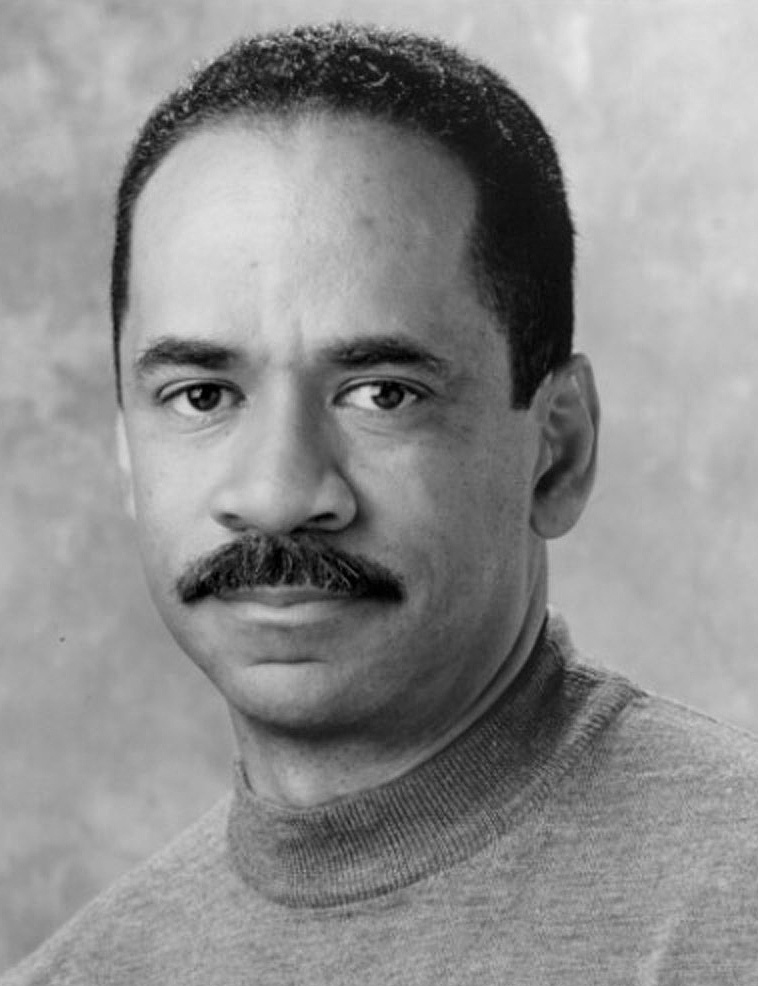
Yep. He was the Dad or – and I hope he doesn’t mind me saying this, but he probably will…never read this – poor man’s Bill Cosby. But I loved the show and was delighted to hear that he does a lot of work with the British Film Institute (where I work) with regards to African and its diaspora filmmaking as well as heading a yearly project to assist young filmmakers from the UK and US in proper career training in filmmaking from development to distribution. As part of the regular African Odysseys season at the BFI, Reid showed his 1995 baby Once Upon a Time When We Were Colored.
I went into the film knowing very little about it, that’s how I like to go into films in general but especially for African Odysseys. I love the feeling of watching a film and realising that you’ve discovered a cinematic gem. This has happened more often than not at African Odysseys and other related events and because of the sold out screening I assumed I’d have the same reaction. I did read before the lights went down that upon its release Once Upon a Time was considered the less melodramatic little brother of Steven Speilberg’s The Color Purple, a film that I like for the most part…
I understand fully the above description of Once Upon a Time, it’s a sweeping epic in terms of the time span it covers just like The Color Purple. Like Purple the story is more about a community rather than an individual or small group, although this film is also tied down by a central character. And rightfully described it is not as melodramatic as Purple, a film (I know it’s based on the book by the excellent Alice Walker) that piles on one devastating problem one after the other on a the poor put upon character portrayed in the film by Whoopi Goldberg, to highlight the discrimination and injustice suffered by blacks in the southern states of USA during the first half of the 20th century.
I think, however, the two films have different agendas. Purple is a deliberate political commentary on the misogynistic and racist society that black women had to survive in – double discrimination if you wish. Once Upon a Time is set in a similar period, segration in the South, but it’s focus is more on how a community thrived despite the open discrimination. If anything, although Tim Reid, adamantly stated that this is not a society he ever would wish to see in existence again, he wanted to make a film (also based on a book) giving an alternate version to the typically violent angry depictions of blacks suffering demonstrably while waiting for white Southerners to see the light. He suggests that in this circumstances strong community ties were created and people even flourished that blacks although knowing that the situation laws were discriminatory and unjust, but instead of dwelling on their situation, they helped themselves and each other to survive instead of waiting for help.
This homage to such resilient, strong people was not only provided a sense of pride and respect in me while watching the film but also a refreshing insight to an era of American history that has always intrigued me. That is not to say that the film is not without its flaws. However judging the overall quality of the film and the obstacles Reid faced producing the film, is a remarkable achievement and a film that although was well received to this packed out screening, deserved much more recognition and position in African American cinema cannon.
The general plot of Once Upon A Time is basic, favorably so, allowing the characters to develop. Over two decades, the film follows the lives of a close-knit African American community called Colour Town who live and depend on each other under segregation in the rural Deep South. The film is based on the real-life memoirs of Clifton Taulbert who is the central character of the film and is played by three different actors to show the film’s decades long time span, from him as a little boy being brought up by his grandfather to him leaving for the North as a young man.
The simplicity of the plot also allows for the film to focus on the characters (and there are many. Reid stated in his Q&A that there are over 80 different speaking parts) and the many themes they represent that become central to the politics of segregation. The major themes explore the North/South divide and why black people started to flee the South and segregation in search of opportunity in the North, the fight for change and progress, community, hope, religion, separate but equal are among some of the themes the film touches upon.
As you’d expect, a film having so many tangents on which to go off on results in some things are only briefly touched upon, but the film cleverly succeeds in not making this a bigger fault than it could potentially have been. The film have a soft focus almost sentimental look that results in some of these potentially dramatic story-lines being treated almost superficially. Although I thought that the “Oprah look” as I like to call it would diminish the story, I found it surprisingly endearing and that the point of the film was to reflect the general attitude of the film’s inhabitants – to acknowledge the problems and injustice they encounter but to fight them in the way that they knew best, by living in flourishing community, surviving in their own quiet way .
Ultimately this is a nostalgic look at an individual’s upbringing, not necessarily a political statement and the film’s tone consistently stresses this, which means that I found myself not minding the sometimes superficial approach to reality of life in the Deep South. I’ve read a couple of reviews (some from critics, some from audiences) and I’m aware that some people might feel that the film played “too nice” and that they felt cheated that there were no explosive confrontations and focus on the beginning of the Civil Rights Movement. Well all I can say is if that’s what you want, you can find that in every other film about that period of time or just in American film in general that has a central Black character or “Black story”. While, the “Black Experience” for many was filled with confrontation, anger and violence for rights, for many more life went on. The Civil Rights Movement didn’t happen over night, nor did it happen on the doorsteps of many Black Americans in the US. For many, life was about just trying to live peacefully. The film does not ‘fail’ to tell the story of the “Black Plight” the way it should be told because believe it or not, while there are many that fought every day, they are many like in any other revolution who quietly went on to live their lives or showed support for the movement (as this film demonstrates) in other less confrontational ways.
The vast cast highlights an array of African American talent that I fear have been forgotten in recent times. The likes of Al Freeman Jr (who sadly passed away last year) and Phylicia Rashad give strong assured performances, portraying fleshed out characters despite their relative minimal screen time. That is also something else I appreciated about the film, the fact the characters could feel so developed and their stories told well despite the film being filled with MANY vignettes and subplots. This I think is down to Tim Reid’s good direction, a look or a line is used extremely economically to express a number of ideas and connections and although some come of as a bit cliche or corny, many more are pulled off successfully so that although you’ve only seen a particular character for a couple of minutes you feel you might know as fully fleshed people you could actually meet.
That’s not to say that this works for all the characters and their stories. This was a relatively low budget period feature and anyone who’s worked in film will know that when you are making a period piece that has many locations, much of your budget will be spend on getting the detail correct, which the film does. This means bargaining with talent and while Reid successes in the casting of talent like Freeman and Rashad, there are some notably shaky performances from more inexperienced such as Isaac Hayes as a preacher and Charles Earl Taylor Jr as Clifton aged 5. I will allow some leeway with regards to the latter purely because of his extremely young age and he doesn’t appear to have been in anything else since and I applaud the contributions of all who participated in the film, but in a film where most of the performances were very good, the not so good seemed glaring. But as they’re not on the screen for that long, in the grand schemes of things should not be judged too harshly.
Overall thoughts
I liked this as an alternative view of what it was like to live in segregation. Tim Reid successfully adapts the memoirs of Clifton Taulbert to breath life into a community that I felt by the end of film that I was part of. Seeing the film as it wants to be and as it is – a nostaglic look at childhood – will mean that you’ll enjoy it more. Political commentary is not really what you’re going to get here. Seek out films like Black Power Mixtape instead and you shall be rewarded.
Funny little side story:
Tim Reid had an amusing anecdote about the making the making of the film. Apparently because this film wasn’t like the popular tales of urban dystopia of coming out at that time (think Boyz ‘N’ The Hood) securing funding for Once Upon A Time was particularly difficult. So when money was secured it had to be spent as quickly as possible in fear of investors demanding it back. This meant Reid had to start shooting way before cotton picking season, waiting for the right season was out of the question. This provided a conundrum because at this particular time cotton fields are bare. Not a ball of cotton to be seen. The solution was to advertise the film and its story via radio and local local news begging the kind assistance of townsfolk in sticking cotton balls BACK onto their stalks. Tim was more than impressed at the turnout and equally surprised at the demographic make up of these volunteers. All of them were white and there was he, a black man, found himself in a surreal situation of having to yell instructions from a platform and mega phone to all his cotton….put-back-ons. It made quite the spectacle for local newspapers and crew and industry visitors.
 THE STATION AGENT SPEAKS