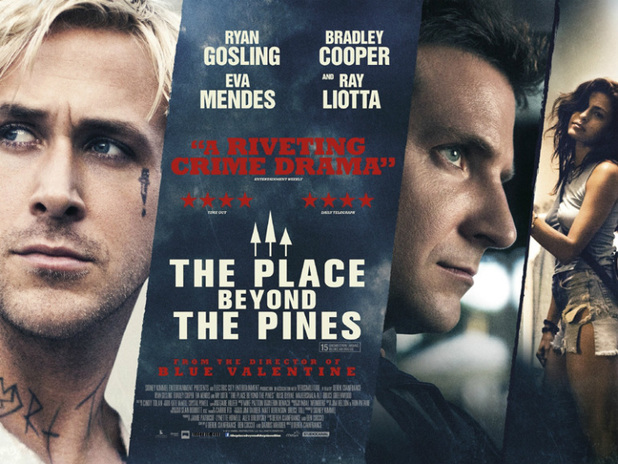
Before I start to review a film I literally have just seen, I’m actually just outside the screening room, I thought I’d put a question out there that I would really love some feedback from. My question is:
“Are my reviews/articles too damn long?”
In my very first posting I railed against the lackluster and disservice being shown by supposed well-reputed reviewers to the general trade of film criticism citing Guardian’s review of Safety Not Guaranteed as the example that sent me over the edge as the reason why I would do my own reviews, for myself and for any other poor sod who was up to reading my thoughts. I wanted to provide something that I feel is lacking in British film reviewing – in-depth film critiquing and discussion – inviting others to join in the debate. I realise now that the sheer length of my posts may be off-putting and because that is the complete opposite of what I want to have happen, I was wondering if it’s time to the editorial side of me be put to work.
What do you guys think? PLEASE COMMENT!
Anyhoo, time to proceed with the review, which I hope you will find a little more concise. The beginnings of a new age maybe?
The Review
What’s a good word to describe to The Place Beyond The Pines?
I would say….ambitious.
Maybe epic. Or a modern saga.
Regardless the film wasn’t as I had expected. That’s not to say I didn’t like it. But I didn’t love it either. Unfortunately for me, the great ambition this film has lends it an inconsistency that makes it inferior to Blue Valentine, Derek Cianfrance’s first and far superior colloboration with Ryan Gosling. That’s not to say that there aren’t great moments in this film. The first being Ryan Gosling.
I am a huge fan of the Gosling (who isn’t? My male colleagues proudly declare that they would.) Personally I became a fan back in his The Believer days, being bowled over the fact that I found myself somewhat attracted by the overwhelming smouldering charisma…of a skinny Neo-Nazi Skinhead. When I tried to explain this new being that had entered my life (citing that even playing a skinhead there was something extremely charismatic about him) I was asked if I had ever thought of seeking therapy. Finally my friends decided he was just one of those weird crushes everybody has. It seems over the last few years (starting from the Notebook and exploding in Drive) the Gosling’s looks have caught up with his charisma and now it seems the man can do no wrong. (Although to be honest, his sensuality is so the focal point of Drive it ended up being a little bit over the top for this young lady, almost cartoonish. And pornographic. I expected him at some point to look directly at the camera doing the “Hey girl” meme. Not that I would have complained.)
But back to his ACTING. Whatever one thinks of Blue Valentine and The Pines film direction, I would be hard pressed to argue the genuine magic in the partnership between Cianfrance and Gosling. Whatever techniques the former uses to direct actors, it works wonders for Gosling who seems to produce his best work. While initially it seems in The Pines that Gosling is resurrecting his Drive character it quickly becomes evident that beyond the camera gazing into Gosling’s eyes (which it does a lot of…dreamy!) there are many layers to this character and he is far from his film noir smouldering in Drive, which I know is kind of the point of the stylisation of the film (guys, I did like the film. I did!)
With the camera just patiently observing Gosling’s movements, his performance reminded me of the performance Michelle Williams gave in Meek’s Cutoff (the only true highlight of a truly trying film). Both contain the ability to mesmerise the audience just by a look, giving a backstory and history to their character and express a myriad of emotions, of anger, disappointment, vulnerability and hope all behind a facade of stoicism and strength. In the case of The Pines, there is a particularly poignant scene in a church where the camera lingers on Gosling’s face as he expresses all of this.
Powerful moments such as this had me anticipating that the film would be the perfect follow-up to Blue Valentine. And while there are moments like this littered throughout the film, there are equal parts elements of the film that simply didn’t work for me. I often thought while watching the film that certain plot points either tied up too neatly or were dealt with superficially, almost as sacrifices to main plot lines of characters that of more interest to Cianfrance. This is why I found the film inconsistent. The film had so many themes to explore, which individually could be films in themselves, that it seemed inevitable that in the near two and half hour runtime, which is still considerably lengthy, not every theme/sub plot is going to be treated with the same care or detail. Cianfrance tries valiantly but I don’t believe is entirely successful.
What are these themes you might ask?
Well there’s the exploration of the father/son relationship between two men Ryan Gosling’s Luke Glanton, who is so desperate to provide for a recently discovered son from a fling with Romina (Eva Mendes), that he resorts to criminal activity to supplement the minimum wage he earns. In contrast, Bradley Cooper stars as Avery Cross, a low-ranking, lawyer trained, aspirational police officer who has no money problems regarding providing for his own son (who happens to be the same age as Glanton’s son) but doesn’t appear to have the fatherly instinct or love that Glanton has. Mixed in there, is the question about class and the murky world of criminality where good people are willing to do bad if they think they are doing it for good.
It doesn’t end there….there are two more acts. Not so much the traditional three act structure of a beginning middle and end so much as three stories that have elements entwined to connect them. See ambitious!
The story moves on, turning into a TV police procedural or brother companion to films like The Departed or Copland (the latter also starring Ray Liotta, the scary poster child for the effects of heavy cocaine use) as the film explores police corruption
Then finally the film turns into a kind of teen drama as the film explores the effects of these two fathers actions on their sons fifteen years later. Its somewhat circular in that it comes back to father/son relationships but from the perspective of the sons. There’s also a bit of a look at teenagers and their drugs and parties and what not, which I wanted to ignore but it was interesting to think about the question Cianfrance presents of whether children are predisposed to follow in their parent’s footsteps.
One can see why with all of these vignettes, some plot lines feel neglected at the expense of those that would have been more interesting to explore. The police corruption storyline stands out to me as one that was unnecessary and took the story away from where it should have been going. There is also the problem of story lines being too neatly wrapped up or coincidental to share the same loose storytelling realism of the first 45 minutes of the film. The penulitmate scene in the third act jumps out at me as something that felt so contrived and unrealistic that the emotional punch that Cianfrance was going for is lost to the point where it felt extremely anti-climatic and quite honestly…boring. As I watched the film, I realised my enjoyment followed the laws of Diminishing Returns:
ACT 1: Excellent
ACT 2: Not so much.
ACT 3: Not so much and lots of contrivances and coincidences.
Some of the performances didn’t help. Overall the range of acting ability I would say went from excellent (Ryan Gosling of course and Ben Mendelsohn, who kind of reminded me of John Hawkes in both looks and acting style) to competent. Ray Liotta basically did what he always done (apart from Corinna Corinna) so he can be dependable when playing the unhinged. I’d also add that Dane Dehaan of Chronicle fame does well here. He once again reminded me of Leonardo Dicaprio a la Basketball Diaries and I’m going to sound like I’m a condescending old lady (even though he’s the same age as me) but me thinks he has a bright future in the world of acting. His presence on screen stopped me from outwardly disliking the third act as well as the return of Mendelsohn as Robin.
However, other performances weren’t so grand in my opinion. While I lauded Bradley Cooper’s performance in the ok Silver Lining’s Playbook, here I felt the same ambivalence that I had before Playbook. To me he was unconvincing in the role, as a policemen, as an aspiring politician, as anything really. I just sensed unease while watching him and the only time that translated well was with the relationship with his son. Other than that, I felt his lack of confidence was almost palpable. The directing actor style Cianfrance used with Ryan Gosling didn’t seem to work for Bradley Cooper.
Eva Mendes didn’t seem to have much of a presence which was surprising for me because the little marketing I saw prior to the screening seemed to be that she would have had more of a role. Alas, fooled by misleading marketing again. I felt her role was also underwritten that it shows in her performance. I cannot judge her performance against say that of Michelle Williams in Blue Valentine purely because I don’t think she had much of a character to work with in the first place. The same goes for Rose Byrne who has less screen time but is able to do a little more with what’s given. This is very much a boy’s film. Its about the world of boys, their transitioning to men and what effects their fathers have on that. Women have a peripheral presence which is why this film was just a tad more alienating than say the empathy or sympathy Blue Valentine stirred in me even though just like in The Pines I was presented with experiences I haven’t been exposed to.
Overall thoughts…
I certainly didn’t want a rehash of Blue Valentine but I wanted to recognise some of the style that had connected with me in The Place Beyond The Pines. Alas I got that for the first forty-five minutes of the film, where there is an organic looseness to the story and the performances. Beyond that my hopes were dashed and while there are moments of sparkling ingenuity and energy littered throughout the film, overall the inconsistent plot pacing and sup plots that seem to needlessly take over the film lend the bulk of the film an uneven tone. A couple of contrivances at the end lessen the emotional punch the film was building up to create a dull ending at odds with opening moments of the film.
I very much enjoyed Blue Valentine, I like Derek Cianfrance and think he’s a great talent. Combine this with the excellent relationship he has with Ryan Gosling, whom I hope to be a continuing partner in future projects with Cianfrance, the new Martin Scorcese/Leonardo Dicaprio or Christophe Waltz/Quentin Tarantino dynamic duo of independent film if you will, Cianfrance is placed in a small pool of directors who’s work I will always be excited to see. Even if that finished product isn’t always to my taste. And I will even watch even if there’s no Gosling present. That’s how much faith I have in this guy. In all seriousness he has demonstrated his talent in flashes in an ambitious film that had equal parts that worked for me and parts that didn’t. If I had to give a letter grade (which I don’t but I will) it would get a B.
I definitely recommend the film but not with wholehearted praise and enthusiasm that I had hoped. I don’t believe this is Cianfrance’s best work but there’s enough evidence that he’s definitely got the skills to produce something truly epic.
Next film: Mama Africa – If Nelson Mandela is considered Papa Africa. Miriam Makeba was his wife through sheer awesomeness.


 THE STATION AGENT SPEAKS
Gonna check it out 🙂
Did you get a chance to check it out? What do you think?
I’ve been told that I was too harsh in my review, but I wrote what was my honest opinion at the time.