For some reason I have been dreading writing a review of 12 Years A Slave ever since my first viewing way back on an October morning (yes, I’ve seen this film multiple times). It was one of those films where I just didn’t think I could find the words to articulate my feelings towards it – the subject matter, the film itself, it’s reception. What I could predict when stepping out into the unforgiving sunlight on that morning was this film would be monumental, but not in the monumental-smash-hit kind of way. Initially what was some back story that would delve into my overwhelming feelings about the film and then the review became something much bigger. A little too big to contain in one post. I wouldn’t do that to you all. Instead what is a sort of thesis about my thoughts about slavery, it’s depiction and relationship with filmmakers and audiences. A cohesive and succinct review will follow shortly, so please persevere guys ‘cos things will get interesting!
History and the Problem of Slavery
My interest, if that’s the right word, in the subject of The Trans-Atlantic Slave Trade, dates back to my university days when I was studying slave narrative in Philosophy and Language. In amongst drowning in the interesting yet demanding theories of Chomsky, Pinker, Strauss and Foucault, I was introduced to the notion of how the power dynamics between slave (male) and master is reproduced in the slave home between husband and wife. Although the linguistic world of slavery was particularly starting and revelatory, what was also startling and slightly unnerving to me was how very little I knew about one of the biggest genocides committed against a people, an event that span two hundred years and is still silently having effect today. How shameful I knew so little.
(As a sort of disclaimer: I would like to note at this point that when I am referring to slavery I am referring specifically to the Transatlantic Slave Trade. I am fully aware the word itself does not only mean the Transatlantic Slave Trade and there are other types of slavery, for reasons of brevity please assume, unless otherwise stated, I am referring to one type of slavery.)
The teaching of history
Was my ignorance my fault alone or a societal issue? Is this a prime example of active manipulation of history into tools of propaganda for the ‘powers that be’ to control the minds and hearts of the masses? Keep the subjects faithful and peaceful by keeping them unaware? Or was it a subconscious effort to not learn too much about a concept too unpalatable to comprehend.
The word or concept of slavery in my formative years were that it was very bad. That pretty much ended the conversation. The word itself was unspoken taboo. Mere mention began and ended conversations. This silence over the subject was embraced in my strictly European upbringing and before the arrival of the internet, well sustained. There were times in childhood where there would be valiant types (teachers black and white alike and others) who wanting to provide answers to the questions I had about the world around me and feed my inquisitive mind would introduce me to literature about Africa and my country of heritage and it’s histories before, during and after slavery. They would try and encourage discussion about the mentality behind the Slave Trade and how it endured for so long.
These people seem to never be around long enough for me to have my questions answered. Looking back I realise why. These people were frowned upon by the well meaning rest, why should such a nubile sharp mind be poisoned with knowledge of the past. What’s done is done. She doesn’t need to know. And we don’t really want to potentially produce an angry young black person. We’ve got plenty of those in that place called London.
So the Slave Trade like the details of the British Empire were placed in the essential yet largely undiscussed moments of history canon. In educational terms, discussion of the Slave Trade is not even in the national curriculum and if it is, the British presence is conspicuously absent, making a grand entrance during the Abolitionist period. Don’t even ask for details about how the British Empire came to be so Great. Its all the more amusing since Britain prides itself on being a former global empire but it’s a bit lazy on the details of how it came to be that. Purely because it wants to distance itself from the barbaric methods used to achieve this method but still wants to revel in the memory of the results. The Trans-Atlantic Slave Trade is treated in much the same vein. If it is mentioned it’s treated as strictly an American phenomenon, curiously omitting their global membership in a global trade.
This tactic of misremembering is not just a British thing too, it’s a tactic shared globally. The results of treating the Slave Trade as an isolated event, perpetuated by other people in another time, in a time that has no connection to the present, serves to encourage revisionist and often ignorant views. Ideally people just want this whole affair to be treated as a misstep best forgotten. An impossible and implausible task if you ask me. The Slave Trade built, shaped, defined the foundations of countries, societies and communities and for that reason, no attempt by any mere mortal on this earth will ever be successful in deleting it from world history and they know it. Try as you might you can’t cherry pick your history, nor make the world dance to one big homogenous beat.
Those who vocally refuse to play ball, those pesky intellectuals, artists or upstarts who want to open that wormhole again? They’re radicals, troublemakers and racists for trying to rustle up unrest in a ‘post-racial’ society (that clearly doesn’t exist but that’s a subject for another day) quashing any form of discussion and as a consequence any true progression to the ‘post-racial’ society sought after. The key to progression is education. Education and discussion. To acknowledge the dark with the light of society leads to a better outlook for a more utopian future. Or that’s the hope.
History and it’s depiction in Film
I’ve been reading a number of articles since the release of 12 Years A Slave, before each have debated the merits of factually accurate film and whether it’s actually possible to have an factually accurate film when things like artistic integrity and narrative structure has to be negotiated. All have stood in a chorus and asked:
Why in 2013/14 are we only first seeing a major film about slavery from the perspective of slaves being made?
Why in deed. But first it must be acknowledged that there are two questions being asked. The first is the apparent lack of films about slave in the film cannon. There have been films made about or in the time of slavery, some big budget (Amistad and Lincoln), and there have been previous adaptations from slave perspectives such as 1977’s TV series Roots, (12 Years has an earlier TV incarnation called Solomon Northup’s Odyssey) but when you add it all up it is still quite shocking to see how few films there are about slavery, when you consider there is a genre dedicated to the creation of the USA – the Western – as well as the the number of war films made about World War II. Despite all of this there still exists pockets of people who scoff indignantly, complaining at yet another film about slavery. And what I say to them once I’ve stopped staring at them in disbelief? Nothing. There’s no point. To them, one film about the evils of slavery is one too many. That say’s more about their issues than the film’s.
But back to the reasons why films on this subject are so rare. The reasons for are innumerable. Some have been illustrated above, the ‘white guilt’ effect and the idea that if you ignore something enough it will go away. Another reason is that Hollywood has always been about 50 years behind society in progressive thinking. It’s run by an extremely homogenous group, usually out of touch and restricted in their oft outdated sense of decency. They don’t want to make films they wouldn’t want to see. By proxy because they don’t want to see it and they deem themselves representative or on the button about the wants of cinema audiences, such films will not be seen and therefore should not be made.
Another reason that critics forget to factor in is that film is not purely about the art. It is first and foremost a business and all those involved, whether they like it or not are in the business of entertaining. Behind all the cries of artistic integrity, which I know many have, that’s why they get into the ‘biz’ as they say, there is the undeniable fundamental need to make money to sustain the industry that allows them to indulge in their artistic pursuits. The fundamental ethos of the filmmaking business is to get the customer to pay for the pleasure they derive from watching a film. The fact that films can be used to educate and inform is an evolutionary offshoot but it’s invariably not the principal reason a film is made, especially if it has a big budget.
Under this rule it makes it easier, but no way right, to relegate certain subjects to the untouchable category and claim them simply unprofitable. As previously mentioned the ones who fund the films feel they are representative of those who go to see them and because films like 12 Years A Slave, I shan’t mince about with words, have the capacity to view their group in an unfavourable light, it is assumed that people don’t want to pay to watch a film where they person representing them, the audience, is the out-and-out bad guy. This is why up until now, any major or popular release that has broached the subject of slavery has often been from detached perspective, depicting slavery in either a rose-tinted tinge of soft focus where slavery wasn’t that bad (Gone With The Wind) and if it was it was bad then a film’s depiction of cruelty is offset by a need to go to great pains to create a heroic Christlike white knight in shining armour who rides in to save the wretched (not to say these men historically did not exist) in films such as Amistad and Amazing Grace.
Even within the subject of slavery there is seemingly very little existing documentation of slave experiences. The presiding reason for this is slaves lived and died (deliberately by their owners) illiterate. Education was an incredibly dangerous tool to hand to a slave and could result in a death sentence if a slave was found to be literate. On a practical level owners were afraid literate slaves would write themselves and others free papers, but they were also frightened of the power, knowledge and education brings. It’s hard to oppress someone if they know as much or even more than you
The ongoing effect this enforced illiteracy has for some created an overwhelming absence of physical documentation of the slave experience. There are some that believe that although slavery may have ended it’s oppressive force is still in effect. There are of course source materials that exist on which films like 12 Years A Slave can draw inspiration from but they seem few and far between. People who hold the more cynical view that there is hardly nothing that exists that document slave experience forget other methods employed by slaves in making their voices heard and their stories never forgotten. We have the endurability of art, music and folklore to thank for that. We just have to be as creative as they were in our learning and understanding.
In the case of literature, written documentations of slave experiences, initially controversial or popular upon release fell into obscurity for a century or so (besides 12 Years A Slave, there was also Harriet Jacobs’ Incidents in the Life of a Slave Girl and Harriet Beecher Stowe’s Uncle Tom’s Cabin to name but a few titles to seek out) are slowly being rediscovered over the last fifty years. This is particularly true of the last decade as filmmakers look further afield for new inspiration.
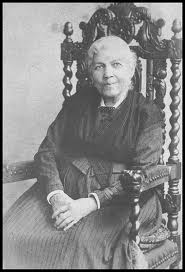
Harriet Jacobs, author – Incidents in the Life of a Slave Girl
Why the interest now? What’s changed?
Society and audiences have. When the audience changes, so do their tastes. Audiences are able to think and want more than what film studios have previously given them credit for. Audiences I believe are getting more savvy and it’s only natural that they should be, they want more from their films. The reception to films like Lincoln demonstrate that ‘Hollywoodization’ of historical events is not as entertaining as it used to be and it speaks to a growing resistance to historical ‘untruths’ propagated all in the name of art. Audiences are tired of obvious liberties being taken with history. With ever increasing access to alternative perspectives and truths audiences rightfully expect films to present the same. That is why nowadays it seems that films the strive to stay faithful to their source material are more reverred and withstand the test of time better than those who are more flagrant with their factual interpretations.
That is not to say that 12 Years A Slave is necessarily the original testament to faithful adaptation, nor is it a 100% historically accurate. It faced all the same obstacles of other historical film adaptations. There are times, and it is understandable, where artistic integrity and dedication to fact doesn’t always go hand in hand. After all, a film is being made and it has to follow the rules of film convention as well as trying to remain as faithful to the original source as possibility.
There will always be those who dispute the validity of such films.They conflate their criticisms of a film’s faithfulness to it’s source material to the quality of the film’s execution. While on occasion such comparisons are justified where the flippant attitude to accuracy mirrors the attitude to the film’s execution, usually they’re not. The same charges have been brought against 12 Years A Slave with critics focussing on the one or two minor changes or ‘liberties’ McQueen takes one or two plot lines in the film – a questionable scene on the slave ship transporting Solomon sticks in the mind. The film’s source material has also endured the same level of criticism
Although upon it’s initial release in 1853, 12 Years A Slave was a bestseller, it then fell into obscurity, as it was suggested the story had been heavily influenced by it’s co-writer David Wilson, a local writer and a white man who people thought had made certain changes to suit his abolitionist views. When the book of 12 Years A Slave was rediscovered and republished in a scholarly edition in 1968 with the annotations substantiated it’s authenticity. By all accounts it’s agreed 12 Years A Slave is mostly accurate and the small changes have no lasting impact to the power of the story.
The Transatlantic Slave Trade cannot be easily forgotten nor should it be. Its resurgence into the public consciousness via an acclaimed film has been a long time coming. It should not however be misconstrued as a time for old wounds to be reopened, for people to start pointing the finger and for people to deeming themselves martyrs of justice by symbolically holding others accountable for being the descendant of those who profited (Don’t get me started on the non-debate that is Benedict Cumberbatch’s heritage). It is neither necessary nor is it appropriate and the film was not made with that in mind. It’s incredibly disingenuous to wallow in another’s pain and adapt someone’s else’s trauma as your own in order to justify your own personal anger and issues. People who do this invite nothing but pain and hatred.
However, modern history insists in remind us with it’s repetitiveness, it is equally dangerous to ignore the past. People who jump to shut down debate even before it’s begun by being so dismissive of the film before actually seeing it prove just as dangerous. History can be uncomfortable. Deal with it. Ignoring it just make it go away. In so many words, those who don’t know their history are doomed to repeat it.
People can only move on and grow once they fully know where they’ve come from. I’m going to stop with the philosophical non-sequiturs now. My point essentially being that in learning about the slavery from mouths of slaves, I felt like I was learning more about my own history. Although I didn’t descend from slaves, like every single African, hell any human being on this planet, I am inextricably touched by that time and it’s about time that was acknowledged. Regardless about your opinion of 12 Years A Slave, you don’t even have to have seen it to understand what it’s presence has done.
Next up: 12 Years A Slave – the review
 THE STATION AGENT SPEAKS
Pingback: 12 Years A Slave: A Revolutionary Masterpiece? | The Station Agent Speaks