It’s been a while since I’ve published the first of what is supposed to be a regular installment, so I thought it high time I did another.
The last few weeks, maybe in recovery from covering the festival (which still has some milage left in terms of reviews) I’ve been easing a little more on films and doing other things like leaving dark rooms and exploring the city I live in – London. So for this round of Recommends & Avoids I’ll be talking about things I’ve done outside the confounds of a darkened space. This is new for me too. I haven’t turned over a new leaf completely however as film still plays a big part in my free time.
Hyde Park
I may sound like an extra in a Richard Curtis film visiting Hyde Park on a brisk Winter day, but I can not sell this place enough as the setting of one of the best days out I’ve had in a while, which makes Hyde Park my highest recommend in this feature’s outing.
Although I’ve lived in London for a number of years, Hyde Park has been a place I have actively avoided visiting for a number of reasons, all of which make me want to kick myself for not discovering and appreciating this gem earlier. One of the main reasons this was an ‘avoid’ was it’s status as a top tourist attraction, living in the centre of London has it’s plusses but one of the negatives is the sheer number of tourists that frequent all my local spots and daily life. Hyde Park in particular always seemed ridiculously busy from various music festival and winter wonderlands to its proximity to London tourist stalwarts like the Royal Albert Hall. I always assumed that with so many people, who can have the time or patience to coordinate a peaceful walk in the park. There are plenty of others in the city. As a consequence I’ve avoided Hyde Park like the plague preferring to travel further out for quiet self reflection.
Luckily I have a good Canadian friend who showed me the error of my ways. A London resident of the last five years, my Canadian friend has been immortalising her adventures in a blog Wanderlust (http://girlroamingaroundtheworld.wordpress.com/). Over the last couple of years that I’ve known her, I tagged along to discover London in a different light, making me much more appreciative of where I live.
One thing I’ve always valued about London is it’s parks, I don’t know whether it takes me back to childhood in a small town or whatever but where people get a sense of calm being by water (which Hyde Park also offers), I get the same feeling spending time in a park. It can be the height of summer or a crisp cold winter day, I love to wander through a park and there are a fair few in London. Locally, at my disposal I have Regent’s Park, Primrose Hill and Hampstead Heath, which I regularly chastise myself for not frequenting more regularly.
Now Hyde Park is a new edition to park hotspots. Initially visiting it so that we can sound like New York types going off to ‘see the colours’ I saw more than the pretty colours of autumn. Despite being in the centre of what can be a relentless, claustrophobic city, I felt like I had taken a day to the countryside. I didn’t feel as if I was in London for a while. The same feeling of restfulness and calm that overcomes me when I leave the city (I used to feel the same while living in New York visiting small corners of Central Park and Prospect Park ) I had just by visiting Hyde. I cannot overestimate how soothing it felt to take a breath and to be able to be in quiet for a while. The fact that this could be achieved via a 10 minute bus/train ride actually buoyed me.
I think it’s resemblance to other parks like Central Park and Vondelpark in Amerstadam, added to the feeling that I’d left the city. Like these parks, Hyde is huge and we only wandered through a small part of it covering the South-East area where the lake and Albert Monument stands. With this in mind, Hyde Park stands as a well of recommends of which one can repeatedly draw from.
Kara Walker Exhibition
FOREWARNING: Viewer Descretion needed on this one.
Controversial and emotional are two words befitting of this exhibition held at the Camden Arts Centre, London. Her room-sized tableaux of black and white cut-paper silhouttes, paper puppet films and large scale sketches explore race, gender, sexuality, violence and identity and the idea of the power struggle in all these instances. This particular exhibition looks to reference history, in particular, the darkest aspect of American history – the slave trade. Through her key themes: Representing Race, History: Collusion of Fact and Fiction, Narrative, Desire and Shame, and lastly Humour, Walker attempts to bring to light the hidden, distorted narratives of American history that permeates the American identity still to this day. Like 12 Years A Slave, Walker’s exhibitions doesn’t shy from the truth of the horrors of history, but her attempts are not necessarily to air old grievances but to encourage discussion and progression.
Books: Middlesex and Kindred
I’ve been bitten once again by the reading bug. I think it’s the season or something. Cold weather makes the prospect of curling up with a good book the most perfect thing to do. During the last few weeks I’ve gone through a many good read including biographies of Sammy Davis Jnr and Lena Horne and old favourites like Michael Cunningham’s A Home At The End of The World and Michael Chabon’s The Wonder Boys. Here are two I would recommend:
The first, Middlesex by Jeffrey Eugenides, (2002) is an epic novel chronicling the journey of a Greek-American family across continents. Contained in this voyage is a unique twist in that the book also follows the journey of single gene in the Stephanides clan that leads to the book’s narrator Callie/Cal’s own personal journey of discovery as a hermaphrodite. Clever storytelling, bizarre detail and evidently diligent historical research makes this an absorbing read. This book is much more than a family drama, it’s also an examination of history – in particular the rise and fall of Detroit, USA . It also plays like an unconventional thriller, as the Alpha 5 Reductase gene that is passed to Callie/Cal permeates throughout the novel, threatening to make an appearance in the cornerstones of life – puberty, love, sex, marriage, offspring, death – so that all these events, while universal and highly personal and filled with tension in this singular epic tale.
I’m now just beginning Kindred by Octavia Butler, this is a two-fold first, for I’ve never read anything by this author and I’m still a bit of a novice when it comes to science fiction reading. I’ve read some well-known fare but was thoroughly intrigued when a colleague recommended Octavia Butler, a revered writer of science fiction which at the height of her fame (1970s) was quite the feat for a woman. A black woman at that. I was recommended to try Lillith’s Brood but I couldn’t get my hands on a copy, so I settled on Kindred. Kindred had an appeal because of the plot – on her 26th birthday in 1976, Dana Franklin finds herself involuntary time travelling back to Maryland at the height of slavery, where she she has been summoned to save the life of a slave owner’s son. Each time spent in that period becomes more perilously wrought with danger as she tries to navigate her survival as a slave.
Besides sounding like an epic sci-fi film in the making, (one that I’ve been writing for a couple of years – SPOOKY!) I read the first couple of pages and was already intrigued by the simple writing style of Butler. While I admire the eloquent poetry of descriptive writing of the likes of Eugenides and Cunningham (although the former could be accused of disrupting this style with elementary writing at times that sometimes clashes with his more textured prose) it’s also refreshing to read a distinctly declarative style that allows for the story to flow. That’s what makes a true sci-fi thriller I suppose.
Film: Gone With The Wind
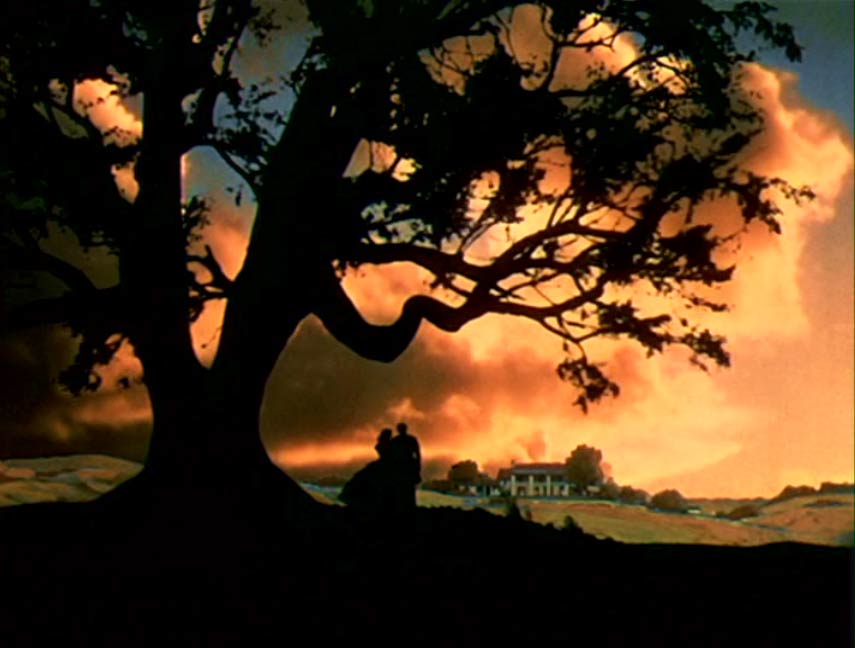
This wouldn’t be a film blog if I didn’t mention film somewhere and while I’ve eased the number of films I’ve seen, I’ve still saw a shit load. Some were good, some not so much (please check avoids portion to see what I mean). This week I decided to be selective about what film’s I ventured to the cinema to see. I wanted something epic and epic is what I got. I saw a restored digital print of Gone With The Wind (1939) starring movie king of the bygone studio system era Clark Gable and theatre Queen and once the other half of the acting dynasty (the Oliviers) Vivien Leigh.
I have vague memories of seeing some of this three and a half epic on TV when channel 4 did matinee screenings of classic film. There film was spread over two days. I was eight and hopped on drugs because I had managed to contract stomach flu, chicken pox and some other infection. The story, I alway remember very little. My experience then was all about the sumptuous and grandiose visuals. Everything was so bright and very red. Really red. Like the world Leigh’s Scarlett O’Hara and Gable’s Rhett Butler inhabited existed only in perpetual sunset. I think it actually might have encouraged my decision to have my room painted red according to folklore. That’s how much of an impression that film left on my drugged out little mind.
Not that there was not enough of an impression for me to tell you what the story was about. I was too young and too out of it to understand the incredibly dated and skewed perception of the Civil War, the Confederacy and depiction of slavery in the film. Watching it as a relatively sober adult, the grotesque viewpoint is really laughable. And that is what surprised me the most about the film. It’s a funny love story about privileged white people from the Southern states of the US. And that’s not as offensive to modern sensibilities as one would think.
Mind depiction of slaves as docile and happy in their roles is again an offensive interpretation but it’s not that far removed from the depiction of the ‘other’ in current Hollywood fare as people might think. So when people flippantly associates Gone With the Wind as that racist film, I can think of a lot more modern fare, that really should know better that could be considered even more racist. But that’s a topic for another day.
The film takes the view that the Confederacy were brave men fighting for an old ‘civilised’ world that resembles more of my old history books about Ancient Egypt than the very real unjust and violent exploitation that swept the nation and the world, it has to be remembered that this film is based on the book, written by a woman who held a certain perspective as a Southern Belle. Margaret Mitchell’s world is very distinct, very upper class and therefore in today’s eyes, very skewed and for some unforgivable. However I think to some degree, the point of Gone With The Wind is missed when the focus is solely on the depiction of slavery and the Civil War because essentially all these elements play as back drops to what is the heart of her world – an epic romance. And romantic Gone With the Wind is. The music, the scenery, the acting – all of it is epic, grandiose and operatic.(The subject of slavery is the whole basis of 12 Years a Slave – it’s in the title! – which is why that story strikes a cord in a different way to GWTW and is why I think the incessant articles comparing the two should stop).
I have to say that I was more captivated by the performances than the story which was laughable at some points because of the grandiosity and extravagance. What made the film funny was the deft jumps from genuinely good moments in the scripts with clever lines from the quick-as-a-whip Scarlet O’Hara to the physical comedy and excellent chemistry between actors, especially Vivien Leigh and Clark Gable (still it doesn’t hold a torch to Leigh’s Scarlet and her relationship to maid/slave Mammy, played by Hattie McDaniel who won a deserved Oscar for her performance). While I’ve seen Clark Gable in a number of films enough to understand why he was so desirable in his prime, I wasn’t as convinced he was a great actor. He is a revelation in Gone With The Wind, a loveable rogue who is adept and appearing aloof, slightly sneering in one instance, to adoring, open and vulnerable in another. And it helps he’s in his prime..physically in this film. I think he was clearly receptive to the evident charms of Miss Leigh, who is magnificent as the manipulative and wholly unlikeable but strangely winning Scarlet O’Hara. It’s an evidently intelligent performance that completely justifies her casting from 200 other possibilities. She embodies Scarlet O’Hara, even when having to say the silliest of lines.
There are certain things about the film I didn’t like that perhaps annoyed me more than it’s unstable perspective. Some tertiary characters didn’t seem simpatico with the grandiose over-the-top nature of the film. Leslie Howard as Ashley Wilkes comes off bland and slightly inexplicable as to why Scarlet would hold a torch for him for the duration of the film, especially with Rhett Butler’s manliness right in her face. I’m also not one for the episodic nature of plot lines and the neatness of which they are dealt with so the next melodramatic event can happen. It gives everything a superficial feel to everything. But I think that one is more about personal taste and of all the films that fall into the similar trap of being so epic with a limited amount of time, Gone With The Wind is a more successful example.
It’s politically incorrect to the point where it’s laughable and it’s so laughable it’s hard to be overly offended by it. It doesn’t give a damn about race but at least it’s honest about it. It’s melodramatic sweeping fun with one of the best parting lines of a character in film history. For that reason alone I think people should see it, if possible on a lovely big screen befitting of it’s epic nature.
AVOIDS!!!
The Counselor
The truest example of too many cooks? A film horrendous in so many ways and for inexplicable reasons that I almost don’t know where to start. But I shall proceed with my main grievances, the main one being that the film simply didn’t know what it wanted to be. Described as a suspense thriller, it’s severely lacking in the former and only recognisable in the latter for containing some of the most hackneyed thriller tropes. Despite the obvious budget and the talent in the the film, there’s no skill or inventive style to Ridley Scott’s direction.
Written by Cormac McCarthy who I normally really like for his striped down writing style (The Road, No Country For Old Men and Sunset Limited comes to mind), that lack of signature style was what struck me about The Counselor and as such permeated throughout the film. To be honest there was no discernable style or tone to the film, adding to the frustratingly incoherent story and even more indecipherable script. The message that I did get from the film – loud and clear – was how much of a waste it seemed. It seemed a waste in talent, not just of Ridley Scott as director and Cormac McCarthy as screenwriter, but from the exciting cast including the near perfect Michael Fassbender (he can afford a blemish on his track record), Penelope Cruz, Javier Bardem ( his bad hair can’t save this film), Brad Pitt and Cameron Diaz.
I wasn’t sure whether the film wanted to be a flashy thriller a la Ocean’s Eleven with its multiple jet setting locations and luxiourious lifestyles of the film’s characters, a glamourous urban western throwback to No Country For Old Men or a generic violent action film. Regardless whatever it was trying to be it failed miserably. This was a film that had the audience taking pleasure in taking extended bathroom breaks and even walkouts.
What the film did succeed in, with flying colours, it completely manages to alienate its audience through sheer incoherence. Because the film doesn’t seem to know what it wants to be and the script is so indecipherable I get the sense that the cast are not all on the same page as to what kind of film they’re in themselves. Michael Fassbender appears to be in a gritty drama that seems more interesting than this mess, Penelope Cruz’s character seems better placed in a romantic drama, Cameron Diaz looks and sounds like she’s a dastardly baddie from a soft-core porn movie and Javier Bardem appears to be in 24 Hour Party People 2.0. Punctuated with extremely long clumsily worded exposition scenes that explain nothing, the inexplicable presence of a graphic scene of a car being violated that also adds nothing , and gratuitous violence thrown in for good measure and for no good reason, its not really surprising that despite having one of the bleakest endings of a film in recent memory (now THAT is signature McCarthy), I felt nothing when the film ended. Well I felt something. The urge to escape. It felt like something had been endured rather than experienced and to me that is not what film is about. It’s safe to say, that this film might may deserve a place higher than Only God Forgives in the Avoids ranking.
If you must watch it, only because you hate yourself or you want to be antagonistic or dissenting it’s still on cinematic release in the UK, rated 18.


Pingback: Recommends & Avoids | chichismovies
What a nice mention! Hyde park is a wonderful gem but now we have to go to other parks. I haven’t been to Primrose Hill and I must get there soon.
I couldn’t agree more! I’m up for a Primrose Hill revisit. I’d like to see it in the winter as I’ve only been in summer.